
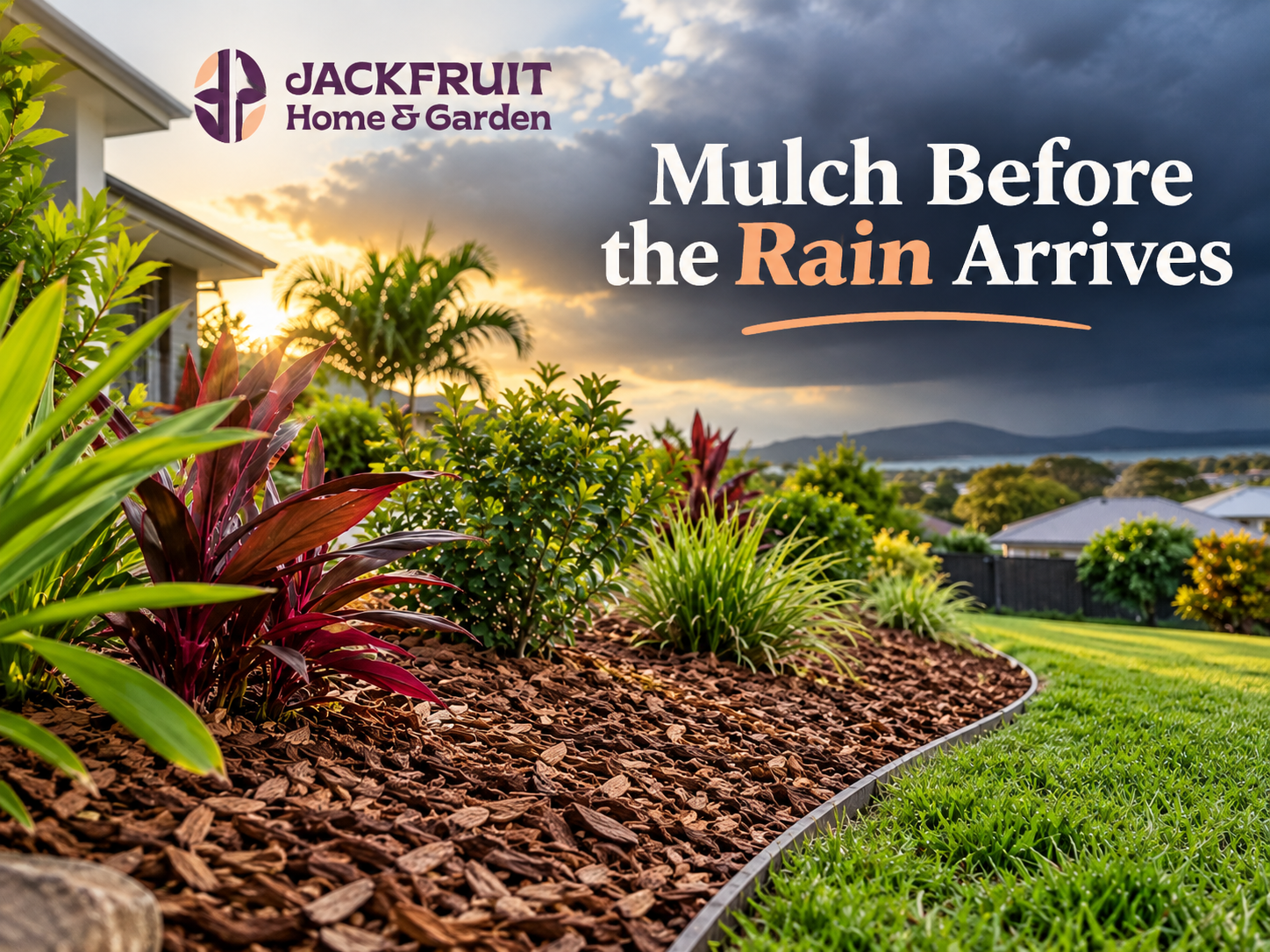
October is the window for mulching in Moreton Bay. Get it down now, before the storms roll in, and it's already doing its job by the time the rain starts – holding moisture, keeping weeds down, and protecting the soil underneath. Wait until after the first downpours and you're mulching over compacted, weed-choked beds instead of getting ahead of them.
Why mulch matters
A layer of mulch sits between your soil and the weather, and that changes how your garden copes with both the dry stretches and the sudden dumps that come with a Queensland wet season.
- Moisture retention – mulch slows evaporation, so soil stays damp for longer between waterings or storms. Once the humidity climbs, that's the difference between a lawn and garden bed that copes and one that dries out in the gaps between rain events.
- Weed suppression – a decent depth of mulch blocks light from reaching weed seed sitting in the topsoil, so far fewer weeds germinate in the first place. Pulling weeds out of a mulched bed is also a lot easier than digging them out of bare, compacted soil.
- Soil temperature – mulch insulates the soil, keeping roots cooler through summer heat and reducing the stress on plants during temperature swings.
- Erosion and compaction – heavy wet season rain hits bare soil hard, washing away topsoil and compacting what's left. Mulch breaks the impact of the rain and keeps soil structure intact.
- Soil health – as mulch breaks down, it adds organic matter back into the soil, feeding the microbes and improving structure over time.
How much to order
Work out the area of each garden bed in square metres (length × width), then multiply by your target depth to get the volume you need in cubic metres. For most garden beds, aim for a depth of 75–100mm – enough to suppress weeds and hold moisture without smothering plant crowns or burying groundcovers.
For example, a 20m² garden bed at 75mm (0.075m) depth needs 1.5m³ of mulch. Add a bit extra for settling and for topping up thin spots – most suppliers will round up to the next half or full cubic metre anyway.
Why bulk beats bagged
Bagged mulch from a hardware store is priced by the bag, and each bag only covers a small area once it's spread. Buying loose from a bulk landscape supply yard and having it delivered by the cubic metre works out significantly cheaper once you're covering anything more than a couple of small beds, and it saves the trip back and forth loading bags into a car boot. Most bulk suppliers in Moreton Bay deliver, so for anything beyond a token top-up, loose is the better buy.
Choosing the right mulch
Mulch isn't one product – the type you choose affects cost, how long it lasts, and how it looks. Here's how the main options stack up.
Budget mulch (mixed forest)
Made from a mix of forestry and timber off-cuts rather than a single wood type, so the chip size and colour vary more than other mulches. It's the cheapest option per cubic metre and does the core job – covering soil, holding moisture, suppressing weeds. It breaks down faster than single-species mulches, so beds need topping up sooner. Good for large areas, budget-driven jobs, and beds where a uniform look isn't the priority.
Sugar cane
Sugar cane mulch is made from the fibrous by-product of cane processing, so it's finer and less structured than a wood chip mulch. It breaks down much faster than hardwood, cypress or tea tree, which suits vegetable beds, herb gardens and annual flower beds where feeding the soil with organic matter matters more than long-lasting coverage. Its fine texture sits well around seedlings and small plants without the sharp edges some wood mulches have, and it's usually one of the cheaper options, often sold in bales rather than by the cubic metre. It needs topping up more often than the others on this list, and it doesn't carry the pest-deterrent properties of tea tree or cypress, so it's better suited to productive garden beds than ornamental ones or beds near structures.
Hardwood chip
Made from a single wood species, giving a more even chip size and consistent colour than mixed mulch. It sits in the middle of the price range and breaks down more slowly, so it holds its coverage and appearance for longer between top-ups. A solid middle-ground choice for garden beds where presentation matters but a premium decorative mulch isn't needed.
Tea tree mulch
Made from melaleuca, tea tree mulch carries the same natural oils that give tea tree its scent, which helps deter insects and gives the mulch a distinctive smell when it's freshly laid. The fibrous chip knits together once it's down, so it holds its shape well on slopes and in wind rather than washing or blowing around. It sits above hardwood chip on price, reflecting the pest-deterrent qualities, and is a common choice for native gardens and ornamental beds where those oils are a drawcard rather than just a byproduct.
Cypress mulch
Cypress contains natural oils that make it resistant to termites and other pests, which makes it a common choice for beds close to the house, decking, or other structures where pest control is a consideration. It also holds dye well, so it's available in colours like red and black for a more deliberate, decorative finish – popular for street-facing beds and entries where street appeal matters. It sits at the higher end of the price range, similar to or above tea tree, reflecting both the pest resistance and the finish.
Get ahead of the wet season
Whichever mulch suits your garden and budget, the timing matters more than the type – mulch laid in October is protecting your soil and holding moisture from the first storm onward, where mulch laid in January is playing catch-up. If you'd like a hand working out volumes, sourcing the right mulch, or getting it laid before the rain sets in, get in touch and we'll sort a quote.