 Home
HomeService · Moreton Bay
Lawn mowing done properly.
A good mow is more than running a mower over the grass. It's choosing the right height for the season, reading how the lawn's grown since the last visit, and knowing when to leave it a few extra days because cutting now would do more harm than good.
This page covers what actually goes into a healthy lawn in South East Queensland's climate – the kind of thing we think you should know whether you do it yourself or have us take care of it.
Frequency
How often to mow
The single most important rule in mowing is this: never cut more than a third of the grass blade in one go. Cut more than that and the plant has to pull energy from its root system to recover, which weakens the lawn over time and opens the door to weeds moving in.
Spring and summer
Weekly, sometimes stretching to ten days in cooler patches
Autumn
Every two to three weeks as growth slows
Winter
As little as once a month – growth is minimal, but weeds don't take winter off
If your lawn's gotten away from you, resist the urge to scalp it back to normal height in one go – take it down gradually over a couple of mows instead.
Grass types
The right height for your grass type
Buffalo and couch – the two most common lawns across Moreton Bay – actually want quite different treatment.
Buffalo
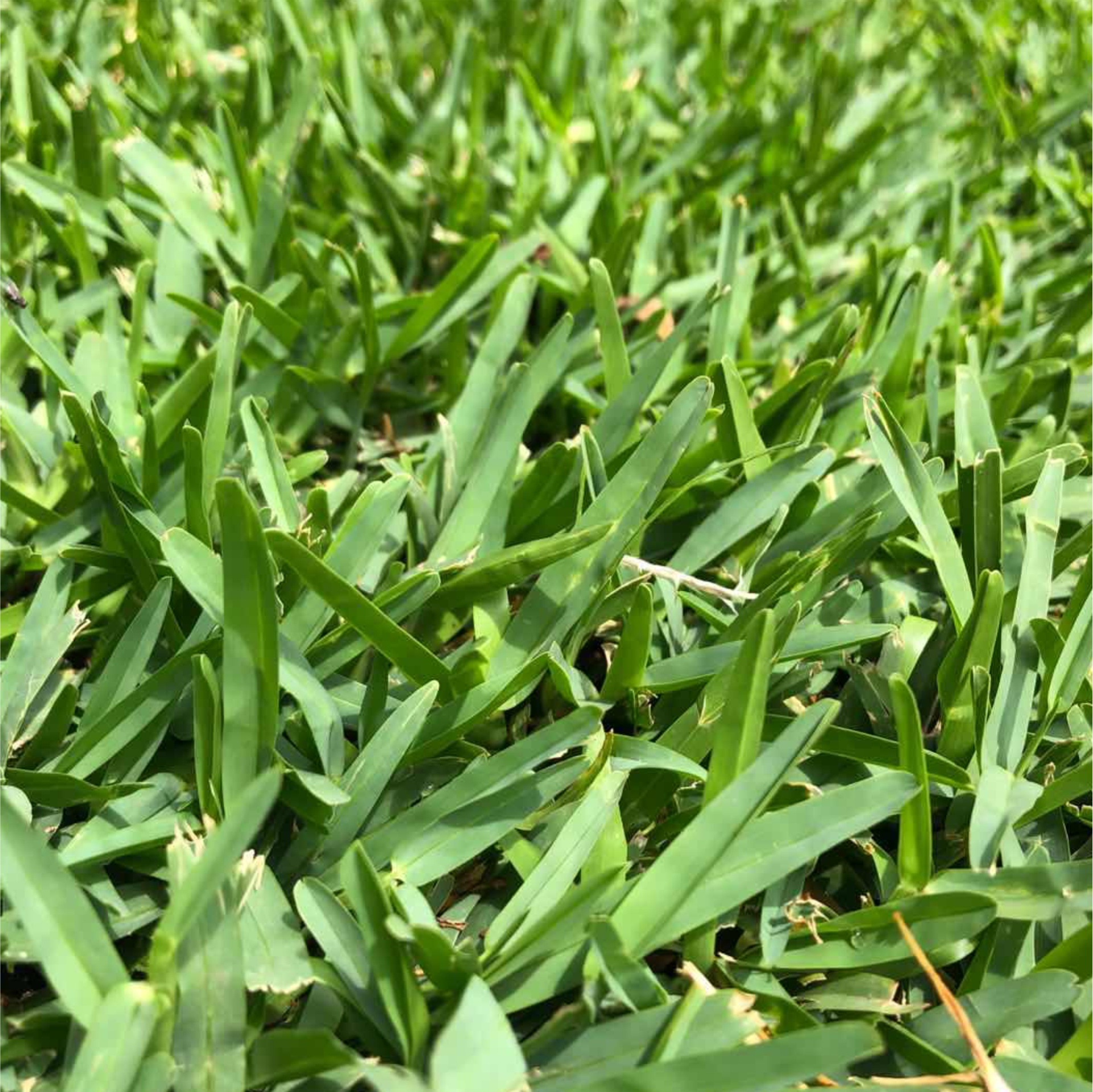
Including Sir Walter, buffalo prefers a slightly longer cut. Never scalp it – cutting too short exposes the stem, weakens the lawn, and gives weeds an opening. It has broad, soft blades and handles shade reasonably well.
Couch
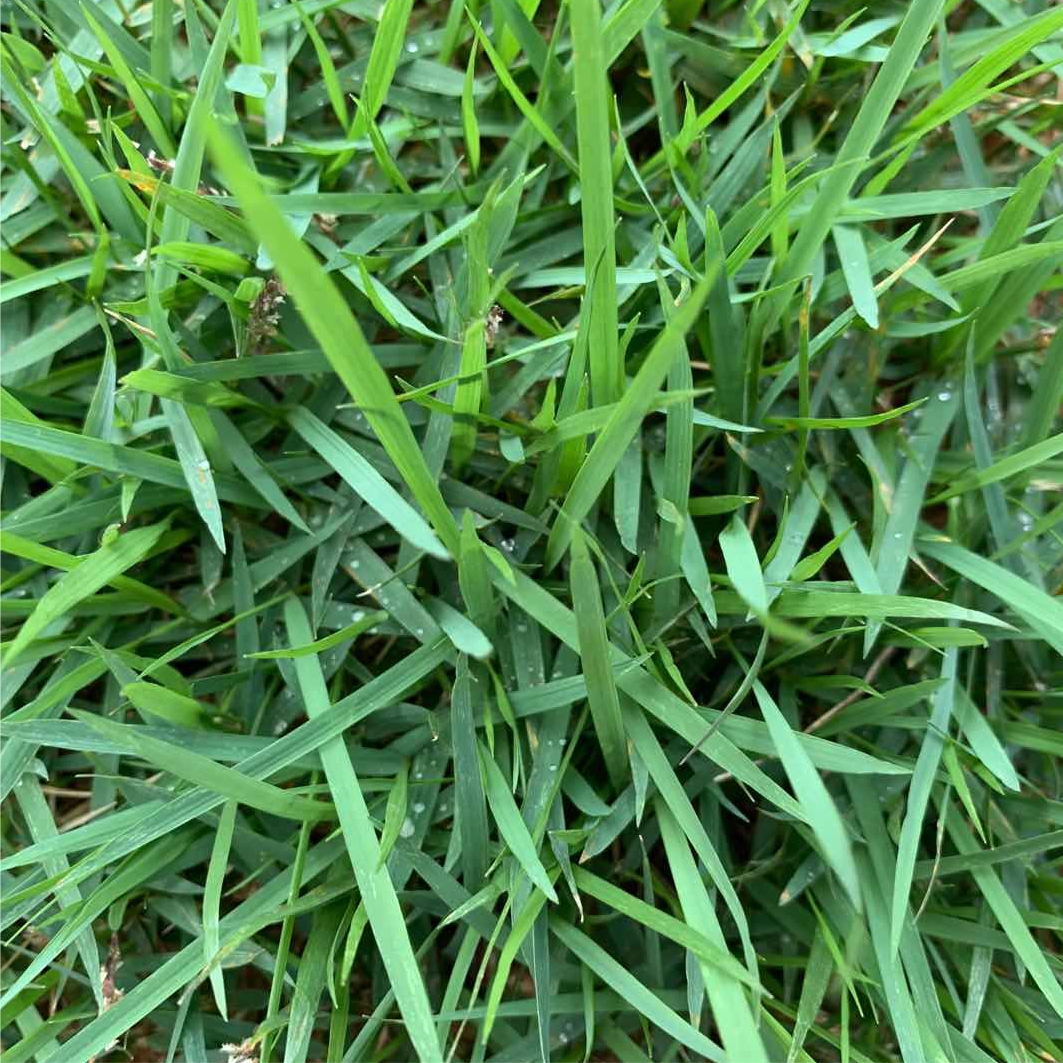
Couch prefers a shorter, tighter cut (around 20–25mm) and benefits from more frequent mowing to stay dense and crowd out weeds. It has fine blades, wants full sun, and spreads by both above-ground runners and underground rhizomes – which is why it fills in fast but is also harder to keep out of garden beds than buffalo.
Edging
Why edging matters
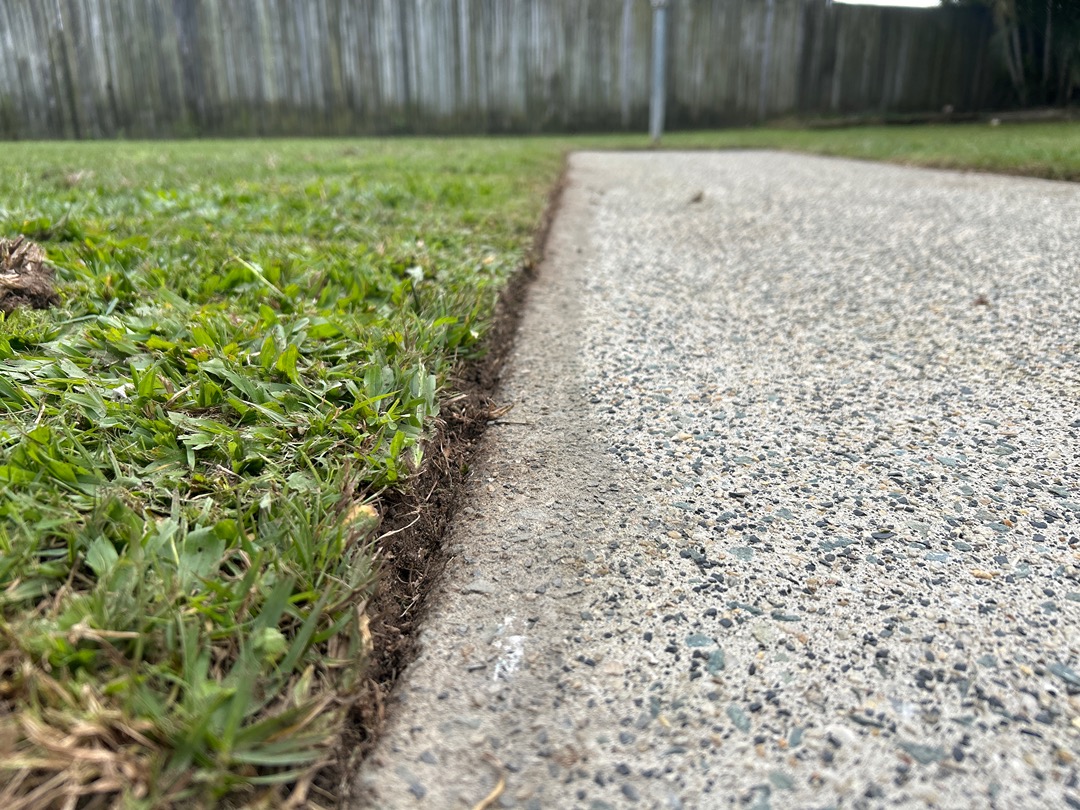
Edging gets treated as the finishing touch, but it's doing real work beyond appearances.
- It stops grass runners physically invading garden beds, driveways, and paths.
- It protects hard surfaces from grass and roots working into cracks.
- It cuts down future maintenance – a clean edge means less time pulling grass back out.
Most professional edging uses two tools in combination: a half-moon edger or powered stick edger to cut a clean vertical line, then a whipper snipper or edging shears to maintain that line between full edges.
Here's a video we posted on edging tools and technique: watch on YouTube.
Watering
Deep, infrequent watering
Deep, infrequent watering beats a quick daily sprinkle – it encourages roots to grow deeper in search of moisture, which makes for a hardier lawn overall. Watering before 10am or after 4pm is standard best practice recommended by Unitywater, since it cuts down on evaporation and gets water to the roots rather than the air.
There are no mandatory water restrictions in place across South East Queensland at the time of writing, but that can change with dam levels – it's worth a quick check of your local council or Unitywater's site if you're ever unsure.
Weeds and pests
What to watch for
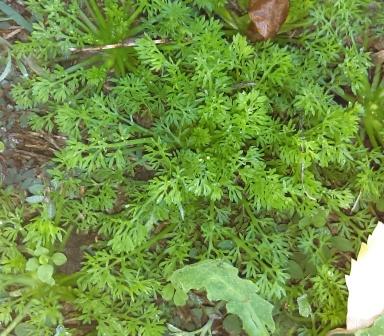
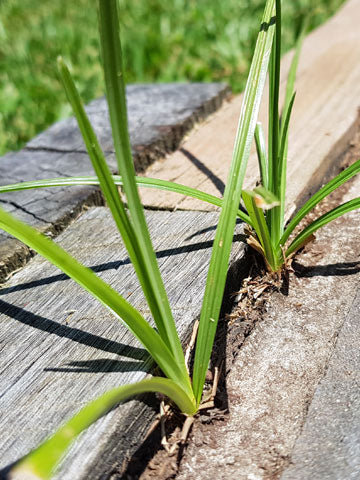
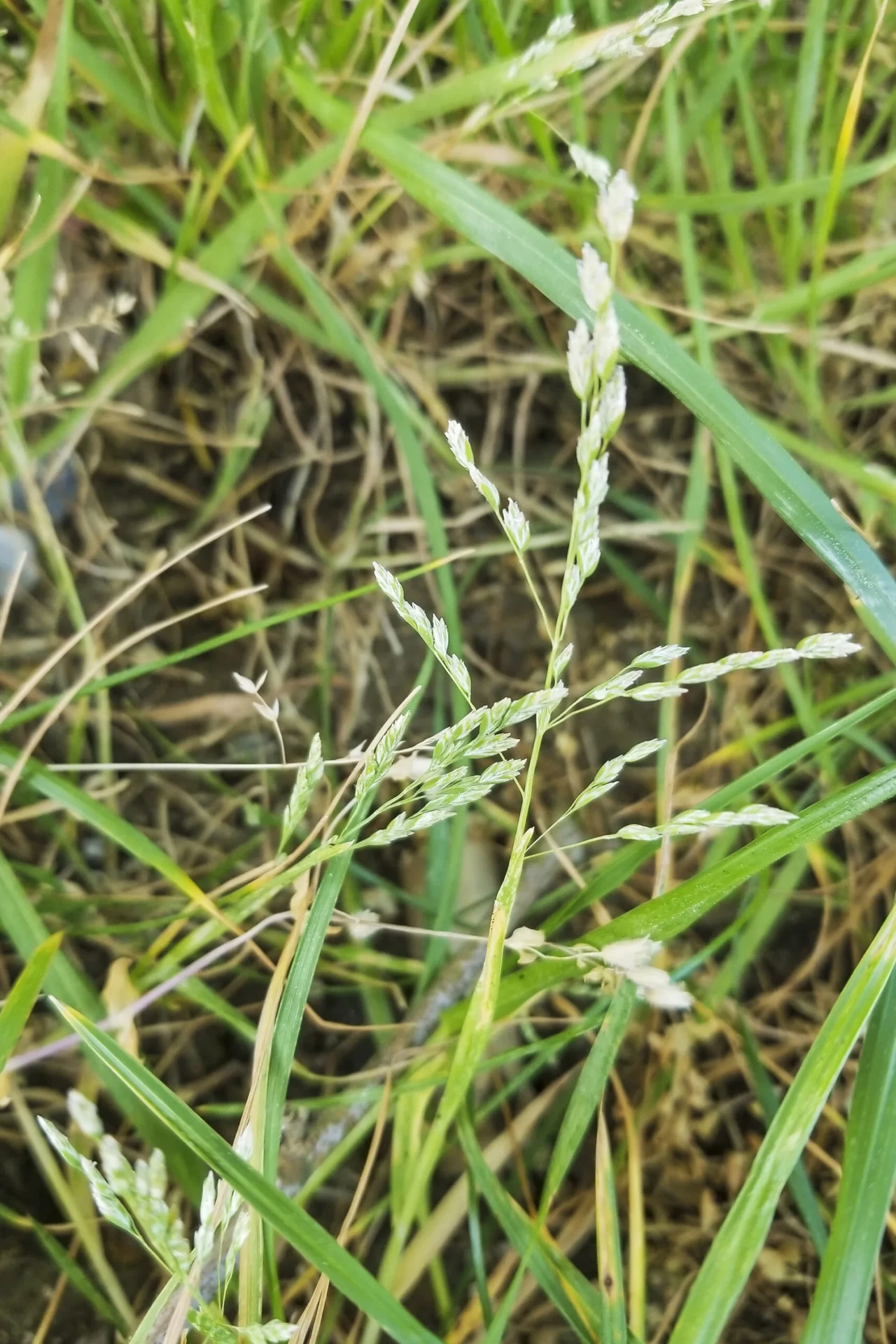
The usual suspects in Moreton Bay lawns are bindii, nutgrass (a sedge, not a true grass – roll a stem between your fingers and it'll feel three-sided rather than round), winter grass, and creeping oxalis. Most show up in cooler months and are easiest to deal with early, before they set seed.
On the pest side, lawn grubs and armyworm are the main culprits, usually appearing after rain in the warmer months. A lawn that suddenly looks patchy or scalped in one section, or has birds unusually active on it early morning, is worth a closer look. A simple way to check: pour a bucket of soapy water over a suspect patch at dusk and see if anything surfaces within about ten minutes.
If you're ever unsure what you're looking at, we're happy to have a look and point you in the right direction.

Biosecurity
Fire ant biosecurity – a genuine Moreton Bay consideration
Most of Moreton Bay sits within Queensland's fire ant biosecurity zone, which comes with real obligations around moving soil, mulch, turf, and other material on and off a property. It's easy to overlook, but it's a genuine legal requirement in this area – not just a suggestion – and it's something we build into how we work, every job.
Weather
Why we don't mow in the wet
If we push your booking back a day because of rain, it's not us being precious about the equipment – mowing wet grass genuinely does more harm than good.
- Wet blades clump and bend rather than standing upright, which means a torn, uneven cut.
- Torn grass is an open door for fungal disease – brown patch, dollar spot, and rust all take hold more easily in wet conditions.
- A mower's weight on saturated soil compacts it, making it harder for air, water, and nutrients to reach the roots.
- Wet clippings clump instead of dispersing, smothering the grass underneath rather than mulching it.
Waiting a day for things to dry out isn't a delay for the sake of it – it's the difference between a clean cut and a lawn that takes weeks to recover from one bad mow.
Video answer: Mowing in wet weather.
Why Jackfruit
What we bring to your lawn
Everything above is what we'd tell a friend doing their own lawn. Here's what we bring to it as a business.
Sharp, properly maintained equipment
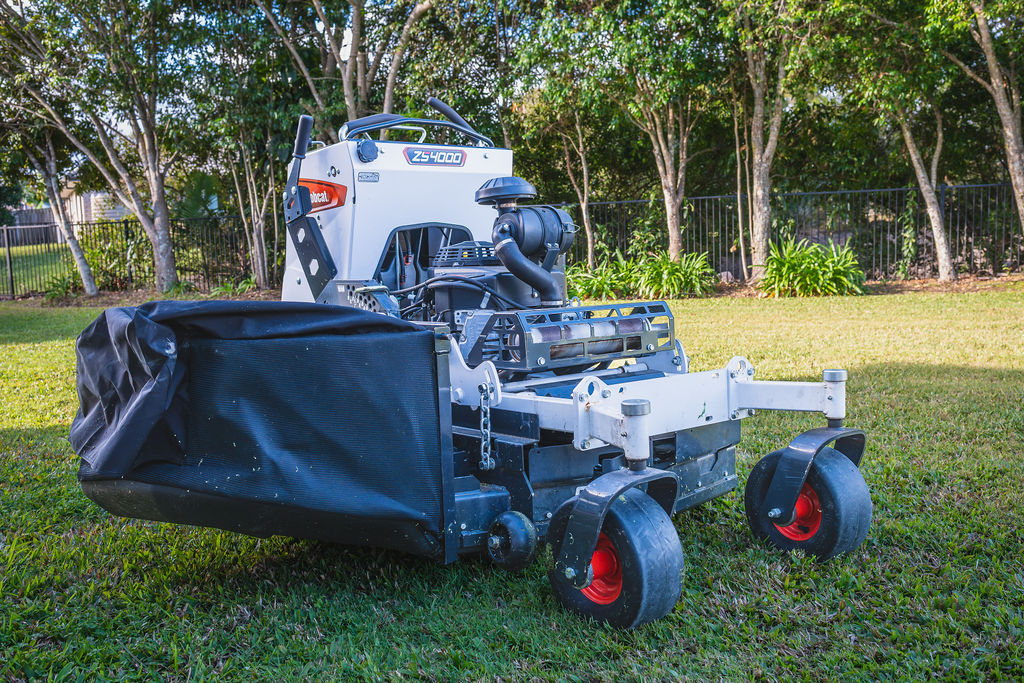
A clean cut heals faster and keeps the lawn healthier than one hacked at with dull blades, so our mowers are serviced on a regular schedule.
Judgement, not just a routine
Adjusting height, frequency, and approach for your specific lawn and the season, rather than running the same settings on every job.
Proper insurance and licensing
Including the chemical licensing required to legally treat a property you don't own, and fire ant biosecurity compliance built into every job.
A real office behind the mower
Scheduling and fieldwork are handled separately, so if your regular operator is unavailable, your service still happens, and someone's always answering the phone.
Same or next-day written quotes, no pressure, and a straight answer if something on your lawn needs a different approach than the one you asked for.
Across Moreton Bay
Lawn mowing across Moreton Bay
We mow across the region, with a few things that shift depending on where you are:
Lawn Mowing in Bellmere
Mowing suited to Bellmere's mix of rural blocks and residential streets.
Learn more →Lawn Mowing in Narangba
Mowing suited to bigger blocks and sandy, free-draining soil.
Learn more →Lawn Mowing in Burpengary
Built for acreage and lifestyle blocks.
Learn more →Lawn Mowing in Caboolture
Mowing that accounts for river-flat drainage.
Learn more →Lawn Mowing in Morayfield
Mowing that scales from tight central blocks to much larger properties out towards the south-west.
Learn more →Lawn Mowing in North Lakes
Neat, consistent presentation for modern estate blocks.
Learn more →Lawn Mowing in Redcliffe
Salt-tolerant approach for coastal blocks.
Learn more →Pricing
Quoted to scope
Mowing is priced on block size and how overgrown things are at the first visit – not a flat rate that ignores the reality of your yard. Get in touch for a same or next-day written quote.