 Home
HomeService · Moreton Bay
New turf, laid properly.
A new lawn lives or dies on what happens before the turf even arrives. Good prep, the right soil underneath, and a sensible choice of variety do more for how your lawn looks in a year's time than almost anything that happens afterwards.
This page walks through the process in order – the kind of thing worth knowing whether you're laying it yourself or having us do it for you.
Preparation
Prep: the most important step by far
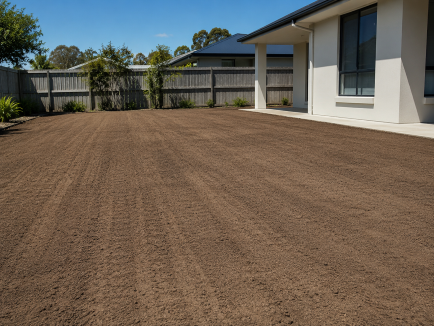
Turf laid on poorly prepared ground rarely recovers from it later – this is the step worth taking seriously, even though it's the least visually satisfying part of the job.
- Assess the site first – drainage, slope, sun exposure, and anything that might get in the way.
- Remove the old grass and any weeds. Small areas can be dug out by hand; a turf cutter makes larger jobs manageable, and very large areas may call for earthmoving equipment. If weeds are significant, treating them a couple of weeks ahead lets everything die off properly before you dig it out.
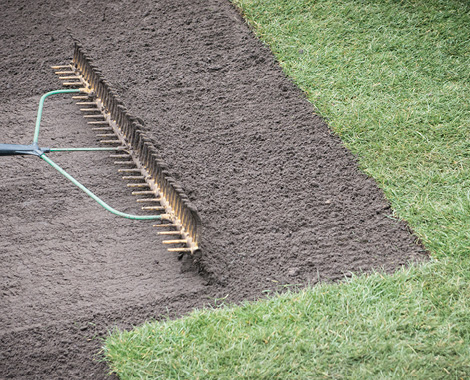
- Turn over and loosen the soil, removing stones, roots, and other debris.
- Grade the area so it falls gently away from the house for drainage. The finished soil level should sit flush with driveways, paths, and edging – unless you're adding under turf, in which case leave enough depth so the turf itself still finishes flush once it's all in.
Where possible, let the prepared soil settle for a couple of weeks before turf goes down. Any weeds that come through in that time are easy to spot and deal with before they're buried under new turf.
Under turf
Under turf – why it's worth using
"Under turf" is a specific product, not just a marketing term – a nutrient-enriched, free-draining sandy loam blend, typically laid 75–100mm deep over the prepared ground. It's recommended because your existing soil might be compacted, heavy clay, or simply lacking the nutrients new turf needs to root quickly.
It's also specifically formulated to resist compacting down over time, unlike ordinary garden soil or fill. Compacted soil is dense and short on air pockets, which makes it genuinely harder for roots to push through and establish. A soil that stays loose gives roots room to spread and take hold properly, rather than fighting their way through it.
Variety
Choosing the right turf variety
The right choice comes down to sun exposure, how the lawn gets used, and how much maintenance you're after:
Couch
Best for: Full sun, high traffic, fast recovery
Watch out for: Struggles in shade
Buffalo (Sir Walter, Sapphire)
Best for: Family lawns, moderate shade (up to ~60–70%)
Watch out for: Needs regular mowing, less drought-hardy than zoysia
Zoysia
Best for: Low-maintenance, drought-tolerant, premium look
Watch out for: Slower to establish and recover from wear
Salt-tolerant varieties (e.g. Nara)
Best for: Coastal blocks with salt-laden wind
Watch out for: Fewer suppliers stock it; check availability
If you're not sure how much shade an area gets through the day, it's worth watching it across a few hours before deciding – a spot that looks shady at 9am can be in full sun by 2pm, and the wrong call here can leave you with dry, dusty patches instead of lush greenery.
It's worth clearing up a common assumption: couch is generally the cheapest variety, but that's not because it's a lesser product. It's simply faster and cheaper to grow – couch reaches saleable maturity quickly, so turf farms can turn it around at lower cost, while buffalo and zoysia grow more slowly and take longer (and more input) to reach the same point. Couch is genuinely the toughest, fastest-recovering option for a full-sun, high-traffic lawn – for the right spot, it's the correct choice, not the compromise one.
Laying
Laying turf – technique and timing
Turf is a living, perishable product, and timing matters: it should be laid within 24 to 48 hours of delivery, and in the height of summer, that window shrinks to just a couple of hours – left rolled up in the heat, it starts cooking and yellowing far faster than most people expect.
For larger areas, most turf suppliers can split an order into two or three deliveries rather than sending it all at once. That gives you time to get the first batch laid properly before the next fresh load arrives, rather than trying to race an entire large lawn's worth of turf before it overheats on the pallet.
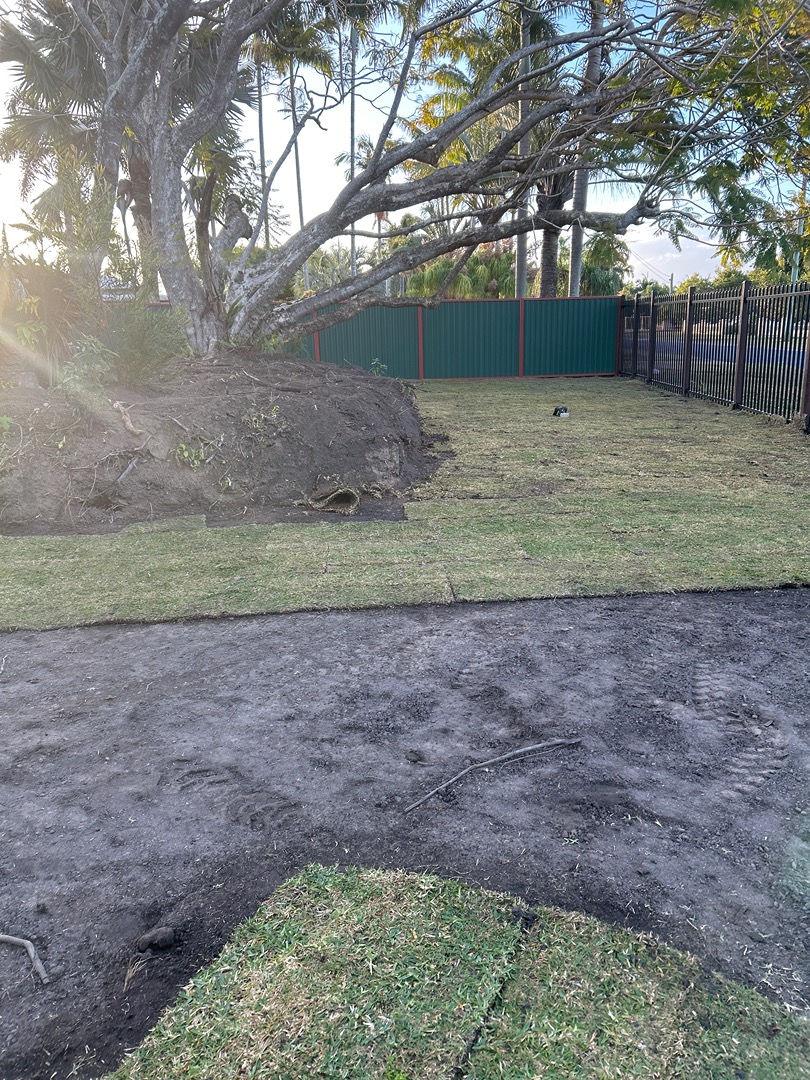
- Start along a straight edge and work outward, facing the un-turfed area so you're not creating dips in the soil with your own footsteps.
- Lay rows in a staggered, brick-like pattern rather than lining up the joints – this stops any single weak seam running through the lawn.
- Push each piece snugly against the next, without overlapping or leaving gaps.
- Firm it down with a light roller, or by hand, so the turf makes good contact with the soil underneath.
Finishing
Shaping the lawn and getting the edges right
This comes back to the grading step at the start: the finished level of the turf should sit flush with driveways, paths, and garden edging – not sitting proud (a trip hazard, and something a mower will scalp) and not sunken either (which leaves an awkward lip and can pool water). Getting this right at the prep stage means a mower can run cleanly along every edge afterwards, without needing to be finished off with a trimmer every single time.
Aftercare
Watering and aftercare
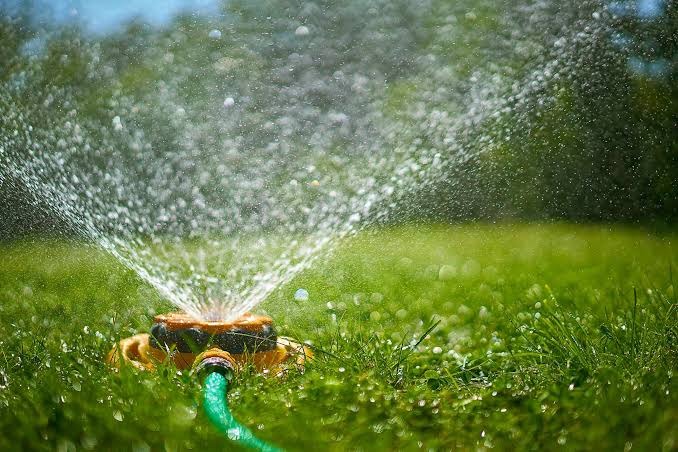
New turf needs consistent moisture to root – not sodden, just reliably damp – typically for the first couple of weeks after laying, tapering off gradually as it establishes.
- Water thoroughly straight after laying, then keep the turf consistently moist for the first 1–2 weeks.
- The simplest way to check if it's rooting: gently tug a corner. If it resists rather than lifting, roots are taking hold.
- Stay off the lawn for around 4 weeks while it establishes. If you have to cross it, lay a board or wide plank down first – it spreads your weight out instead of concentrating it under two feet, which is what leaves lasting footprint dents in soil that hasn't firmed up yet.
- Hold off on the first mow until the turf has rooted (the tug test again) and the grass is a little taller than your usual mowing height – use a lighter mower with a freshly sharpened blade for that first cut, rather than anything heavy that could compact the still-settling soil.
Biosecurity
Fire ant biosecurity – what to consider
Most of Moreton Bay sits within Queensland's fire ant biosecurity zone, and laying new turf genuinely intersects with it – it's worth knowing before you start, whether you're doing the work yourself or having someone else do it.
- Moving soil, mulch, turf, or other "carrier" material off a property within the zone generally requires it to be handled and disposed of correctly – it can't just be dumped or moved anywhere convenient.
- Old turf and soil removed during preparation counts as carrier material, so it needs to go to a facility that's set up to receive it, not just any green waste drop-off.
- If you're sourcing turf or soil from a supplier, it's worth checking they're also operating within the biosecurity requirements for the zone, since compliance runs both ways.
None of this is meant to be alarming – it's a genuine legal requirement in this area, and it's straightforward to get right once you know it applies. If you're ever unsure whether a specific situation is covered, Biosecurity Queensland is the right place to check.
Why Jackfruit
What we bring to a new lawn
Everything above is what we'd walk a friend through before they ordered a pallet of turf. Here's what we bring to it as a business.
Proper ground preparation and grading
Not just rolling turf out over whatever's there – we prep and grade so the finished level is right the first time.
Quality under-turf soil and variety selection
Soil and turf sourced for the variety and conditions that actually suit your site, not just what's easiest to get on the truck.
Correct laying technique
Staggered joints, snug seams, and a finish that sits flush with your paths, driveways, and edging.
Biosecurity compliance built in
Fire ant biosecurity handled correctly – soil and turf sourced and disposed of within the rules for the zone.
Aftercare support
We leave you with a clear watering and establishment guide, and follow up with a post-installation visit so you're not left guessing once the turf is down.
Same or next-day written quotes, and honest advice if a different variety would suit your yard better than the one you had in mind.
Across Moreton Bay
New turf across Moreton Bay
We lay new turf across the region, with a few things that shift depending on where you are:
New Turf in Bellmere
Turf laying suited to Bellmere's growing residential streets and larger blocks.
New Turf in Narangba
Turf selection suited to sandy, free-draining soil on larger blocks.
New Turf in Burpengary
New turf for acreage and lifestyle-block lawns.
New Turf in Caboolture
Turf laying with drainage and river-flat soil conditions in mind.
New Turf in Morayfield
Turf laying that accounts for drainage near the river corridor and block size further out.
New Turf in North Lakes
Turf for new-build and modern estate blocks, laid to a presentation-ready standard.
New Turf in Redcliffe
Turf varieties chosen for coastal wind and salt exposure.
Pricing
Quoted per m²
New turf is quoted per m², depending on the variety chosen and how much site preparation is needed. Get in touch for a same or next-day written quote.