 Home
HomeService · Moreton Bay
Hedging, pruning and trimming.
Pruning is often treated as purely cosmetic – tidying a hedge, keeping a shrub in bounds. It's also doing real work for the plant: opening it up to light and air, redirecting its energy, and removing wood that's already dead or diseased before it becomes a bigger problem.
Get the timing and technique right and a hedge stays dense and healthy; get it wrong and you can spend years waiting for it to recover. This page covers what actually goes into pruning well in South East Queensland's climate.
Tools
The right tool for the job
Using an undersized tool on a branch it wasn't built for is one of the most common mistakes – it crushes and tears rather than cutting cleanly, which leaves a wound that's slower to seal and more open to disease.
| Tool | Best for | Branch size |
|---|---|---|
| Secateurs (hand pruners) | Precise cuts on live growth, tight spaces | Up to ~2cm |
| Loppers | Woodier stems, more leverage and reach | Up to ~5cm |
| Pruning saw | Anything too thick for loppers | 5cm+ |
| Pole pruner / pole saw | Height, without a ladder | Up to ~5cm, at reach |
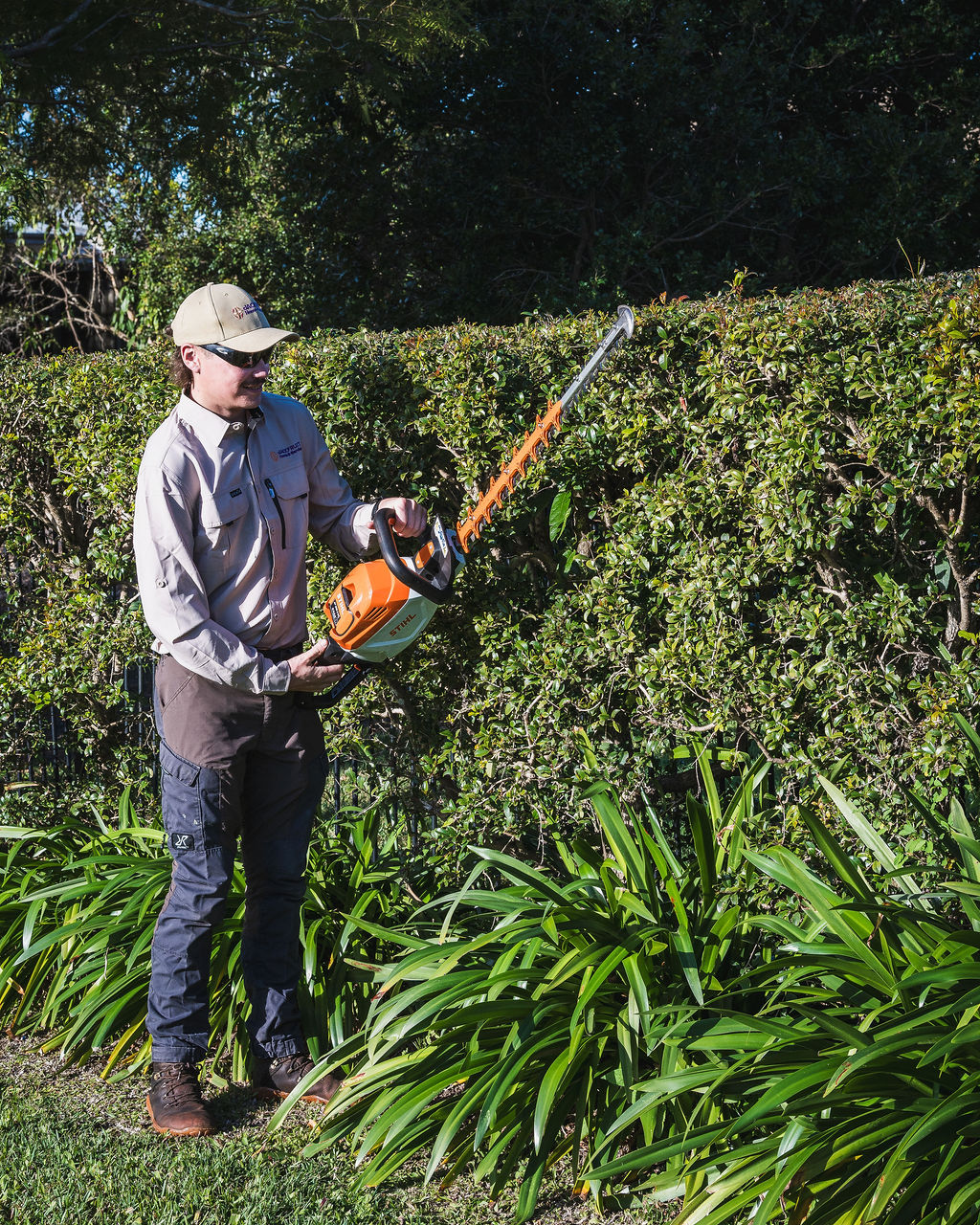
| Hedge shears (manual or powered) | Shaping a hedge face, not thick wood | Foliage and thin stems only |
Within secateurs and loppers, there's also a bypass vs anvil distinction worth knowing: bypass tools have two curved blades that slide past each other like scissors, giving a clean cut best suited to live growth. Anvil tools have a single blade that closes onto a flat surface – they crush rather than slice, which makes them a poorer choice for anything alive, but perfectly fine for cutting back wood that's already dead. And chainsaws? Best left for the large trees and felling – when you don't necessarily need a clean cut to generate growth.
Maintenance
Keeping tools in good condition
A sharp, clean blade isn't just about making the job easier – it directly affects plant health. A clean cut heals faster and is less inviting to disease than a ragged one left by a dull or gummed-up blade.
Wipe and oil
Wipe sap and debris off blades after use, and oil the pivot occasionally to stop them seizing up.
Sharpen regularly
A blade that's dragging rather than slicing through growth is overdue for a sharpen.
Clean between plants and jobs
Clean and disinfect between plants when there's any sign of disease (isopropyl alcohol is the simplest option), and as standard practice between different properties or job sites.
Timing
When to prune, by plant type
Timing matters more than most people expect, and it comes down to whether a plant flowers on "old wood" (growth from the previous season) or "new wood" (growth made this season).
Old wood flowerers
Prune right after flowering finishes – prune too early and you cut off the flowers before they've opened; wait too long and you risk cutting off next season's buds.
New wood flowerers
Prune in late winter or early spring, before new growth kicks off, so the plant has the whole growing season to form buds on the growth you've just encouraged.
For the hedges most common around Moreton Bay, here's how that plays out in practice:
Lilly pilly and murraya
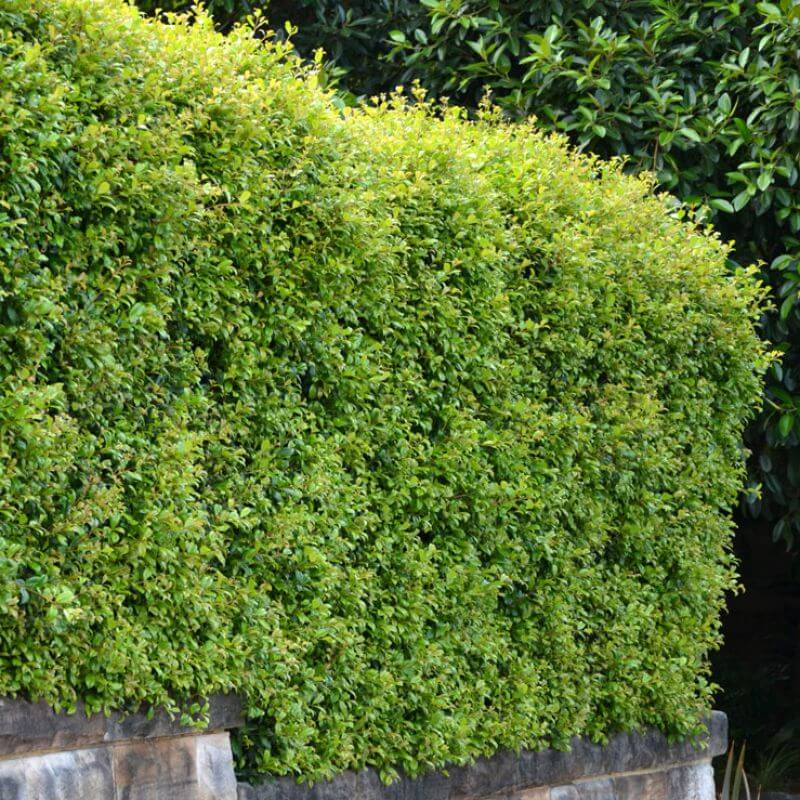
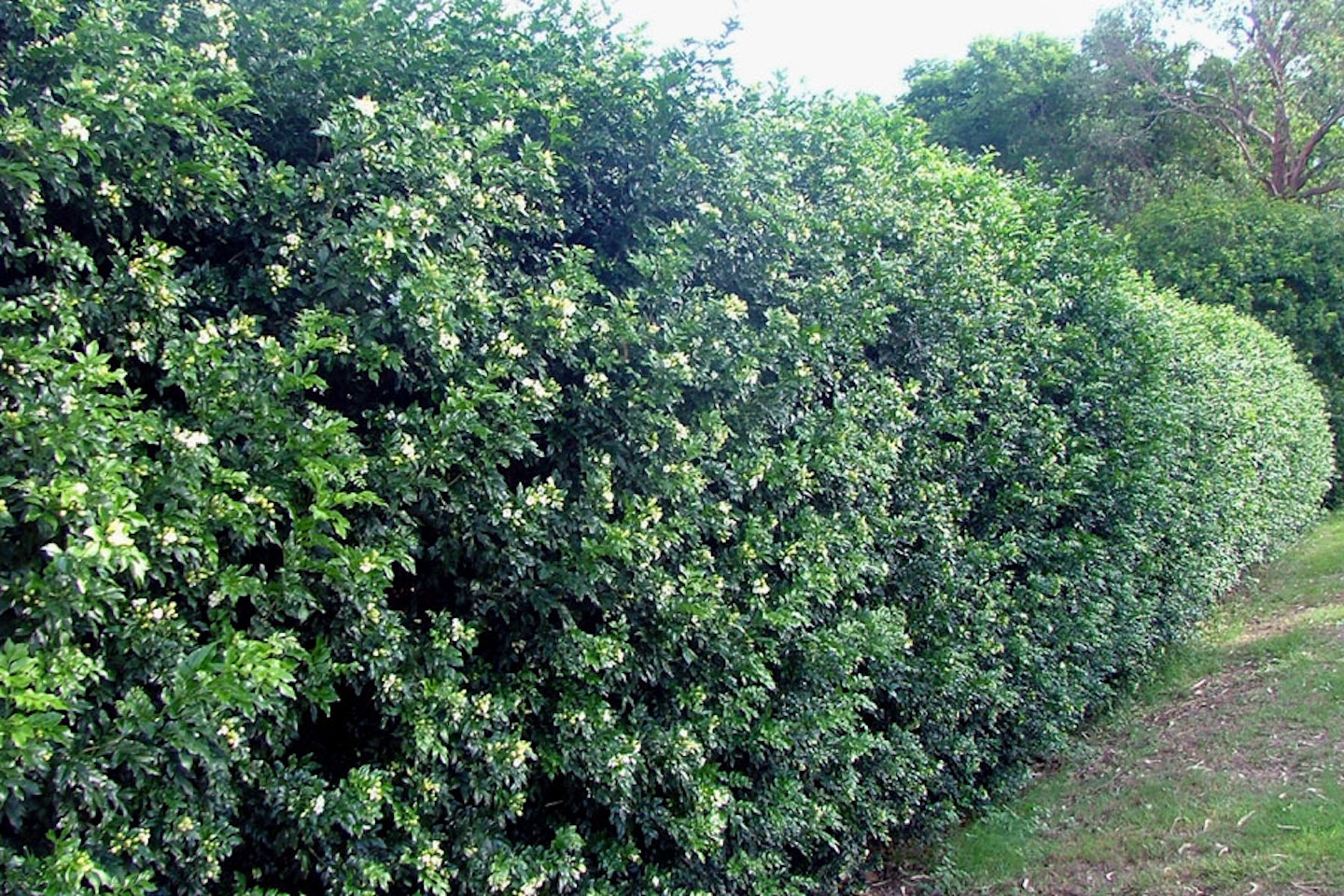
Tolerant, fast-growing, and forgiving – light trims every 4 to 8 weeks through the warmer growing season keep them dense, and both can handle a hard renovation cut if seriously overgrown.
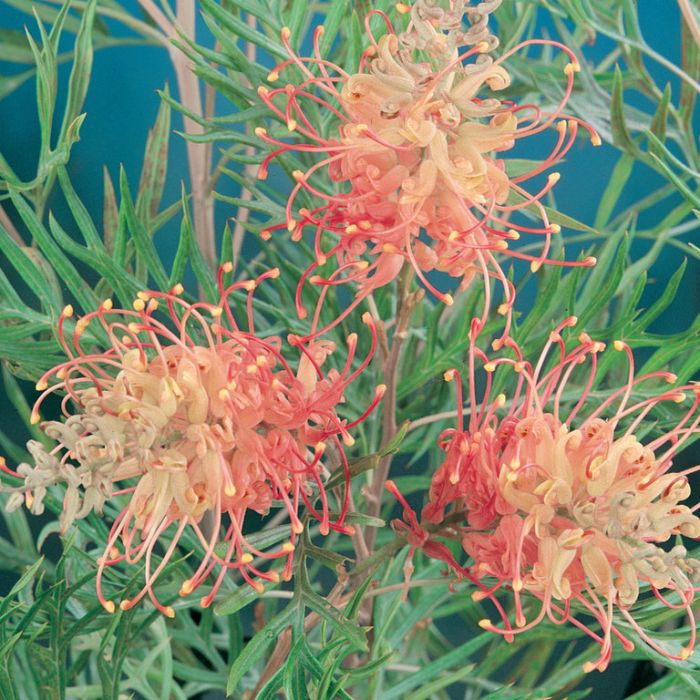
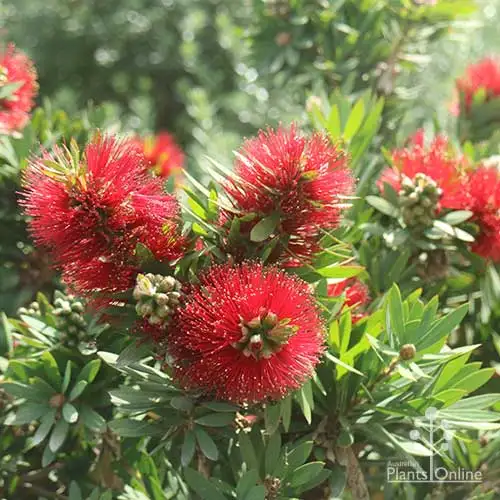
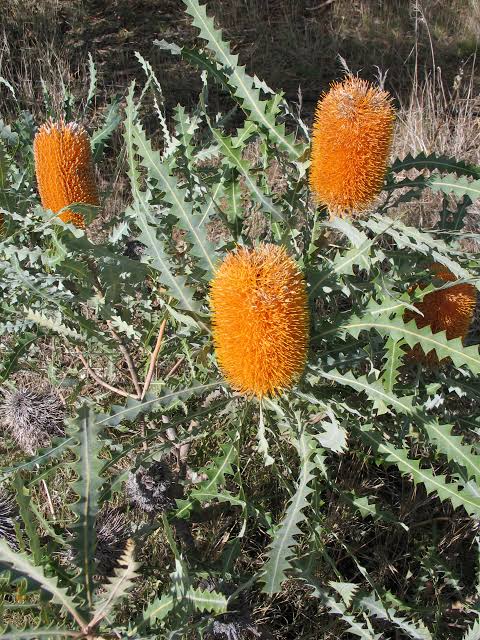
Native shrubs (grevillea, callistemon, banksia)
Prune lightly after their main flowering flush, and avoid cutting back into old, grey wood – many won't reshoot from there, so a hard prune can leave a permanent bare patch rather than a fuller plant.
Technique
Two cuts, two very different outcomes
There are really only two fundamental pruning cuts, and they do opposite things to a plant.
Heading cuts – for density
A heading cut removes just the tip of a stem, cutting back to just above a bud. This stimulates the buds sitting below the cut into new growth, which is exactly what a hedge shear does, over and over, to build up a dense, leafy face. Used well, it thickens a plant up. Used too often in the same spot, it can create a tangle of weak growth right at the surface while the plant's interior goes bare.
Thinning cuts – for structure and health
A thinning cut removes an entire branch or stem back to where it joins a larger branch or the main trunk. Rather than triggering a flush of new growth, it opens the plant up – improving airflow and light into the centre, which genuinely reduces the humid, still conditions fungal disease prefers. This is the cut for removing a genuinely dead or crossing limb, not just shaping the outside.
Misconceptions
Two common misconceptions worth clearing up
"Painting or sealing a fresh cut helps it heal"
This used to be standard advice, and it's now considered outdated. Plants don't heal the way people do – they seal a wound off internally, growing new tissue around the damaged area. Painting or sealing the cut can actually trap moisture underneath, creating exactly the damp, sealed environment that rot and fungal disease prefer. A clean cut, made with a sharp tool, generally does better left alone.
"Cutting a plant back hard fixes an overgrown problem"
Hacking a hedge or shrub back hard (sometimes called topping) looks like a quick fix, but it usually makes the underlying problem worse. It stresses the plant, and the regrowth that follows tends to be weakly attached and grow back even more vigorously – meaning you're often back to the same size within a season or two, except now with a plant that's more prone to disease and less structurally sound. Gradual, regular trimming genuinely gets a better long-term result than an occasional hard cut.
Little and often
Why regular trims beat occasional hard cuts
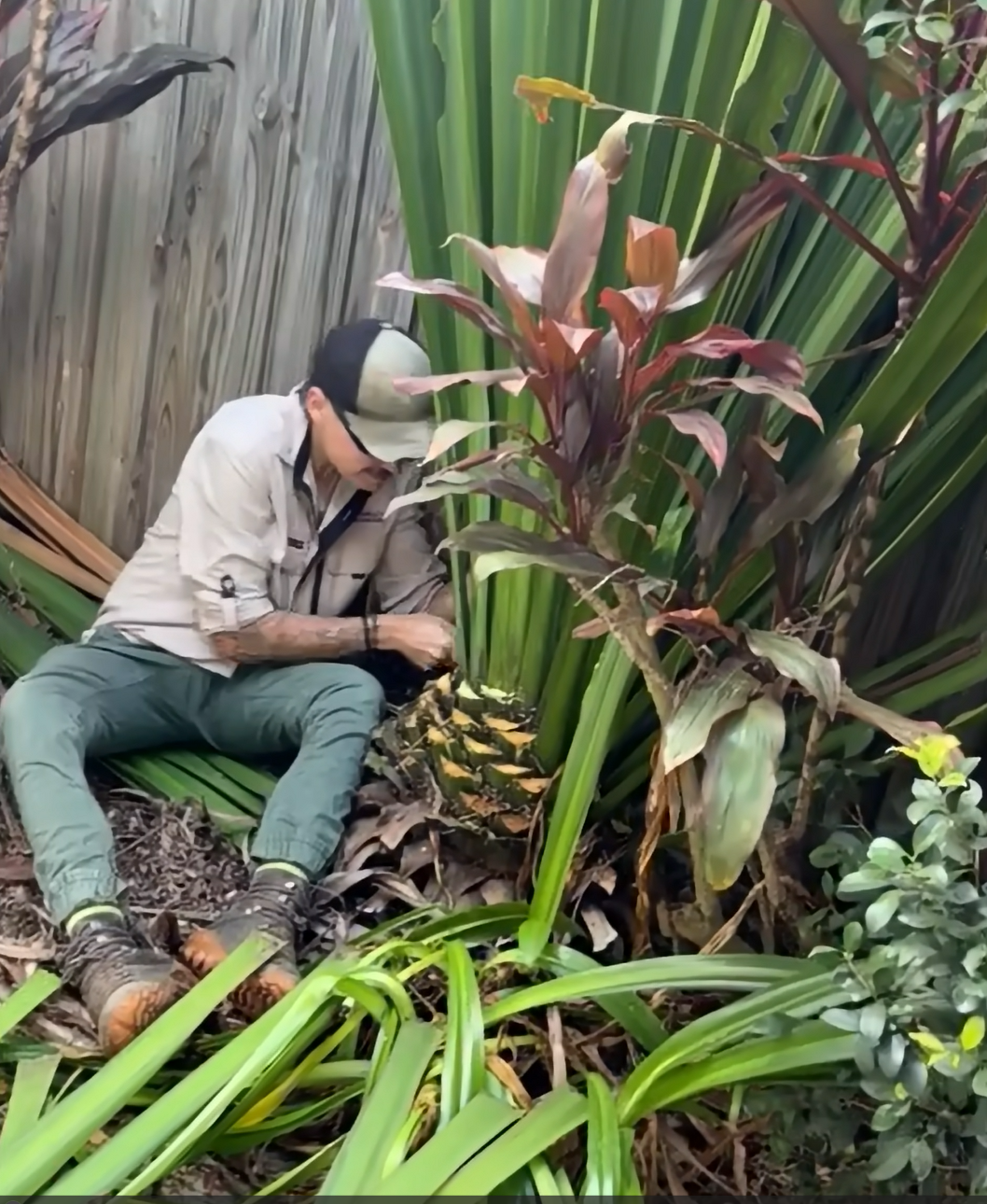
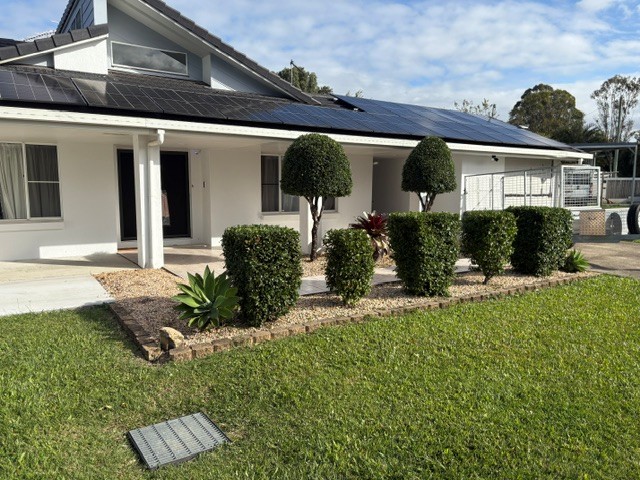
This is really the throughline of everything above: little and often outperforms rare and severe. As a rough rule, avoid removing more than about a third of a plant's growth in one go – more than that stresses it and slows recovery. It's also worth trimming a hedge with a slight taper, wider at the base than the top, so lower branches still get enough light and don't end up bare while the top stays lush.
Safety
Safety when pruning and hedging
Trimming anything at height brings a different set of risks to ground-level gardening, and it's worth taking seriously rather than winging it.
Eye protection
A genuinely underrated one. Branches and offcuts flick back unpredictably, and it's an easy way to end up with an eye injury from something as simple as hand shears.
Gloves and long sleeves
Protection against scratches and cuts, especially from anything thorny or dense.
Sturdy, closed footwear
Good grip is particularly important if you're on a ladder.
Ladders: solid, level ground
The right angle, and ideally someone footing the base rather than working alone.
Tall hedges, anything needing power tools at height, or awkward access are all reasonable points to hand the job over to someone who does it regularly – not because the average person can't manage a ladder, but because the margin for a bad outcome goes up considerably once you're above head height with a cutting tool in hand. And we have insurance.
Why Jackfruit
What we bring to it
Everything above is what we'd talk through with a friend before they grabbed the shears. Here's what we bring to it as a business:
The right tool for the job
Properly maintained and sharp – not a blunt pair of shears pushed through wood they weren't built for.
Judgement on timing and technique
Specific to what's actually growing, not a one-size-fits-all trim.
Safety managed properly
For anything at height, under a documented Safe Work Method Statement for work on taller bushes and trees.
Same or next-day written quotes
And a straight answer if a hedge needs a different approach than the one you asked for.
Across Moreton Bay
Hedging and pruning across Moreton Bay
We handle hedging and pruning across the region, with a few things that shift depending on where you are:
Hedging and Pruning in Bellmere
Pruning for established rural properties and newer residential gardens alike.
Hedging and Pruning in Narangba
Keeping established gardens on acreage blocks in shape.
Hedging and Pruning in Burpengary
Hedging and pruning suited to lifestyle-block gardens and boundary screening.
Hedging and Pruning in Caboolture
Pruning that considers proximity to the river and waterway corridors.
Hedging and Pruning in Morayfield
Pruning suited to established central gardens as much as larger rural-residential hedging further out.
Hedging and Pruning in North Lakes
Neat, consistent hedging for modern estate streetscapes and low-maintenance gardens.
Hedging and Pruning in Redcliffe
Pruning with an eye on wind and salt exposure for coastal gardens.
Pricing
Quoted to scope
Hedging and pruning is typically quoted based on scope, access, and how overgrown things are – a regular light trim is a different job to several years of neglect. Get in touch for a same or next-day written quote.