 Home
HomeService · Moreton Bay
Garden bed design.
A garden bed is a series of decisions, not one big one: how it's laid out, what plants actually suit each other, what holds its edges, what stops weeds moving in, and what soil goes in the ground.
Get the early decisions right and everything after gets easier. This page walks through those decisions in order – the kind of thing worth knowing whether you're planning a new bed yourself or having us design one for you.
Planning
Planning your bed: layout, height, and plant size
Before any plant goes in the ground, it's worth deciding what look you're after – it changes almost every choice that follows.
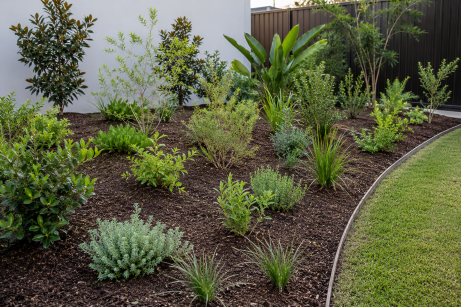
Formal vs informal layout
A formal layout uses straight lines, symmetry, and repeated shapes at regular intervals – it reads as tidy and intentional, and suits period homes or clipped, structured gardens. An informal layout groups plants in odd numbers (three, five, seven) rather than pairs or straight rows, since our eyes read even, regular spacing as artificial and odd-numbered clusters as natural. Once you're grouping more than eight or so of the same plant, it stops being a "cluster" and becomes a drift – a sweeping mass planting that works well in larger beds.
Height and layering
A bed with everything at the same height reads as flat, no matter how nice the plants are individually. Taller plants belong at the back (or centre, if the bed is viewed from all sides), stepping down to shorter plants at the front. As a rough guide, a bed's depth should be roughly double the height of its tallest plant – a 1m shrub wants around 2m of bed depth to look proportionate rather than cramped. Plan around each plant's mature size, not the size it is in the pot – a common and easy mistake.
Pot size: paying for size vs paying for time
Small tube stock is inexpensive but slower to grow in and needs more attention early on. Depending on the plant, it could take years to grow to size. Larger, more established pots cost more but settle in faster and give a finished look immediately. Neither is the "right" choice – it's a genuine trade-off between budget and how long you're willing to wait for the garden to fill out.
Plant pairing
Choosing plants that suit each other
Soil is only one part of picking the right plants – just as important is choosing plants that want the same conditions as their neighbours. Landscapers call this hydrozoning: grouping plants with similar water, sun, and soil needs into the same part of the bed, rather than mixing a thirsty tropical in with a drought-hardy succulent.
The reason it matters is simple maintenance. If one plant wants a deep weekly soak and the plant next to it wants to be left alone for a month, one of them is always going to be either underwatered or sitting in wet soil it doesn't want. Grouping by need means you can water, feed, and mulch a whole section the same way, rather than babysitting every plant differently.
Think about sun exposure too – a bed can easily have a full-sun end and a shadier end, and plants do best when they're placed to match, not squeezed in wherever there's a gap.
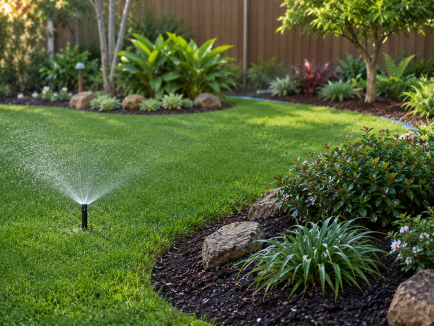
Edging
Garden bed edging: style, cost, and how long it lasts
Edging isn't just a border – it holds the whole design together and keeps whatever's on the ground from migrating onto the lawn (and vice-versa). The right material depends on the look you want and how much you're prepared to spend upfront versus over time.
By style
- Plastic or poly strip – functional and close to invisible once plants grow over it.
- Timber (sleepers or edging boards) – warm and natural, suits cottage-style or native gardens.
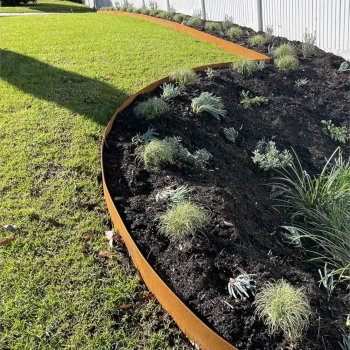
- Steel or corten – clean, minimal sightline – the look most associated with a modern or structured, Palm Springs-style garden.
- Brick or paver – a traditional, formal look that suits period homes and structured layouts.
- Poured concrete or besser block – the most solid and architectural option, and the least "garden" in character.
| Material | Cost | Lifespan | Upkeep |
|---|---|---|---|
| Plastic / poly strip | Lowest | Shortest – a few years before cracking or lifting | Cheap and easy to replace |
| Timber (sleepers/boards) | Low-mid | Mid – weathers over years, replaced section by section | Easy DIY replacement as needed |
| Steel / corten | Mid | Long – holds its line for years | Very low; corten develops a stable rust patina rather than degrading |
| Brick / paver | Mid-high | Long to very long | Low day-to-day, but disruptive to fix if it fails |
| Poured concrete / besser block | Highest | Longest – effectively permanent | Very low day-to-day, but expensive and disruptive to fix if it fails |
Timber and steel sit in the middle on both counts – a noticeably longer lifespan than plastic without the cost or permanence of brick or concrete. Timber will eventually need replacing as it weathers, but it's an easy, section-by-section job; steel holds its line for years with very little attention.
Weed control
Stopping weeds before they start
Rather than fighting weeds after they appear, several ground treatments work to stop them taking hold in the first place – each with a different trade-off.
Organic mulch
Bark, sugarcane, and straw mulch break down over time, feeding the soil as they go, and a good depth (roughly 3–4cm for bark, a bit more for lighter materials like straw) blocks the light weed seeds need to germinate. It needs topping up annually, but it's doing double duty – suppressing weeds and improving the soil. Coloured mulch can look striking, but the dye – although non-toxic – can run if it's fresh.
Living groundcover
Low, spreading plants – native violet, pigface, or Dichondra repens are common local options – physically crowd out weeds by filling the space themselves, while retaining moisture and cooling the soil. Pigface in particular handles full sun and free-draining, sandy soil well, which suits several spots around Moreton Bay.
Decorative stone or gravel
Stone blocks light and smothers germinating weeds in the short term, and it won't wash away or break down like mulch can. It doesn't feed the soil, and it holds heat – worth factoring in for anything other than tough, drought-tolerant planting – but it suits succulents, agaves, and a Palm Springs-style garden well.
Weed matting – genuinely mixed opinions here
Weed matting (landscape fabric) is a fair option to know about, but it's worth going in with realistic expectations rather than treating it as a permanent fix. It does block weeds from below in the short-to-medium term, and it can be genuinely useful for containing plants that spread by runners. The downside, and it's a real one: organic matter and dust settle on top of the fabric over time – even under mulch or gravel – creating a shallow layer where new weeds can seed in from above, regardless of what's happening underneath. Once that happens, pulling those weeds out is harder than pulling them from bare soil, since roots can grow into the weave itself.
Our honest view is that a decent layer of organic mulch alone often does the job just as well over the long run, without that later headache – but matting still has a place under gravel in low-traffic areas, or wherever you're deliberately containing a runner-spreading plant.
Soil
What soil to choose
"Soil" isn't one product, and using the wrong one for the job is a common, avoidable mistake.
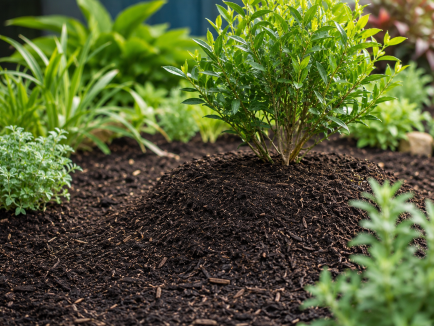
General garden soil
Garden soil is topsoil blended with organic matter (compost, aged manure, composted bark) and worked into your existing ground soil to improve its structure – helping sandy soil hold water and nutrients better, and helping clay soil drain more freely. It's an amendment, not a replacement for what's already there.
Native garden soil – where "organic" and "more expensive" aren't automatically better
Standard organic garden soil, blended with compost or aged manure for general use, is often too rich in phosphorus for phosphorus-sensitive natives – a specific group that includes banksias, grevilleas, hakeas, and waratahs, which evolved in ancient, extremely nutrient-poor soils and can't regulate how much phosphorus they take up. That's why landscape suppliers stock a separate, purpose-formulated low-phosphorus native mix alongside their regular organic garden soil – the two sit side by side for a reason. Mushroom compost is a particular trap: marketed as beneficial, but high in phosphorus and alkaline – a double problem for sensitive natives.
Well-aged compost and mulch, used appropriately, are genuinely good for natives too. It's specifically the phosphorus content of standard blends and manures that causes the problem, not the fact that a product is organic. And not every native is sensitive – plenty of eucalypts, wattles, and coastal natives tolerate standard soil and fertiliser without any issue.
Best soil for your veggie garden
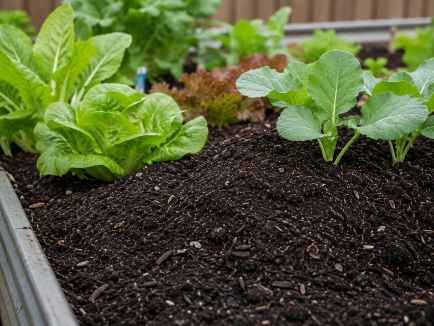
Vegetable beds genuinely need a richer mix than ornamental garden beds – vegetables are hungrier and less forgiving of poor soil than most established shrubs and natives. A common, solid mix is roughly equal parts topsoil, compost, and coarse sand: topsoil for structure, compost for nutrients, and sand for drainage so the bed doesn't stay waterlogged.
Potting mix
Potting mix is a different product again, and often confused with garden soil. It's designed for containers only – lightweight, well-draining, and usually free of weed seeds and soil-borne pathogens. It's not meant for filling garden beds; used in the ground, it can drain too fast and won't hold nutrients the way a proper garden soil blend will.
Matching soil to fertiliser
The soil and fertiliser decisions are linked, not separate. A fertiliser's N-P-K numbers (nitrogen, phosphorus, potassium) should reflect what's actually growing in that soil – low-phosphorus for sensitive natives, a more balanced blend for vegetables and flowering ornamentals that need steady nutrition. It's also worth choosing between quick-release (a fast correction, or a boost for young seedlings that can't wait weeks) and slow-release (steady feeding over a longer period, less risk of burning roots, less frequent applications).
Biosecurity
Fire ant biosecurity – a genuine Moreton Bay consideration
Most of Moreton Bay sits within Queensland's fire ant biosecurity zone, which comes with real obligations around moving soil, mulch, and plant material on and off a property – honestly relevant to garden bed and landscaping work, not just a formality. It's something we build into how every job is planned and run.
Why Jackfruit
What we bring to it
Everything above is what we'd talk through with a friend planning their own garden bed. Here's what we bring to it as a business:
Design input grounded in your site
Soil, sun, and block size – not just what looks good in a photo.
Proper sourcing and handling
Plants, mulch, and materials, including fire ant biosecurity compliance on every job.
The right equipment
Ground preparation, edging, and planting, all properly maintained.
Same or next-day written quotes
And a straight answer if something you've asked for isn't well suited to your spot.
Across Moreton Bay
Garden bed design across Moreton Bay
We design and build garden beds across the region, with a few things that shift depending on where you are:
Garden Bed Design in Bellmere
Garden bed design that accounts for Bellmere's rural soil and block sizes.
Garden Bed Design in Narangba
Planting chosen for sandy, free-draining soil and larger garden spaces.
Garden Bed Design in Burpengary
Garden bed design for acreage-scale gardens and lifestyle blocks.
Garden Bed Design in Caboolture
Bed design and drainage planning suited to river-flat conditions.
Garden Bed Design in Morayfield
Bed design and drainage planning suited to properties near the Caboolture River corridor.
Garden Bed Design in North Lakes
Low-maintenance garden bed design for modern estate blocks.
Garden Bed Design in Redcliffe
Salt-tolerant garden bed design for coastal blocks and sea breeze exposure.
Pricing
Quoted per project, not per rate card
Garden bed and makeover work is quoted per project, based on scope, materials, and site conditions – not a flat rate that ignores what your garden actually needs.